
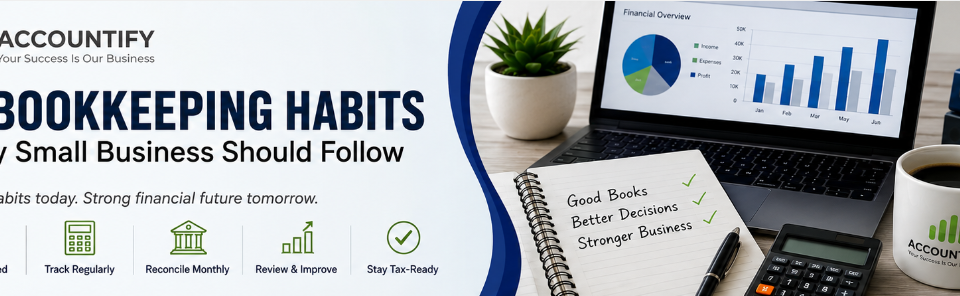
Good bookkeeping helps you understand where your money comes from and where it goes. It also supports better decisions, smoother tax preparation, and stronger financial control.
However, many business owners review their books only during tax season. As a result, they may miss cash shortages, unpaid invoices, costly errors, or useful growth opportunities. These ten habits can help you keep your records accurate throughout the year.
1. Separate Business and Personal Finances
Open a dedicated business bank account and credit card. Then, use them only for business income and expenses.
Mixing personal and business transactions makes your records harder to understand. In addition, it can create tax and reporting problems. The IRS also recommends keeping business and personal expenses separate.irs
2. Record Transactions Regularly
Record sales, expenses, payments, and deposits as they happen. Ideally, update your books daily or at least once a week.
Waiting until the end of the month can create a large backlog. Therefore, regular updates reduce errors and give you a clearer view of your current finances. The IRS notes that recording transactions daily can support effective recordkeeping.irs
3. Reconcile Bank Accounts Monthly
Bank reconciliation means comparing your accounting records with your bank statements. This process helps you find missing deposits, duplicate entries, bank fees, and unauthorized charges.
Complete a reconciliation every month. Moreover, investigate differences quickly instead of carrying them into future reports.
4. Store Receipts Digitally
Save receipts, invoices, bills, and payment confirmations in a secure digital system. You can use accounting software, cloud storage, or a receipt-scanning app.
Digital records are easier to search and organize. They also reduce the risk of losing important documents. For U.S. businesses, the IRS recordkeeping guide explains the importance of keeping documents that support income and expenses.irs
5. Use Consistent Expense Categories
Categorize expenses correctly and use the same categories each month. For example, separate advertising, software, travel, rent, payroll, and office supplies.
Consistent categories make your financial reports easier to understand. In addition, they help you compare expenses over time and prepare more accurate tax records.
6. Track Accounts Receivable
Accounts receivable includes money customers owe your business. Review unpaid invoices regularly and follow up before they become seriously overdue.
Set clear payment terms and send invoices promptly. Furthermore, use an aging report to identify customers who regularly pay late. Faster collections can improve your cash position without increasing sales.
7. Monitor Cash Flow
Profit does not always mean you have enough cash in the bank. For example, you may record a sale today but receive payment several weeks later.
Review your cash inflows and outflows every week or month. Therefore, you can plan for payroll, supplier bills, taxes, loan payments, and other operating costs before they are due.
8. Review Financial Reports Monthly
Review your Profit and Loss Statement, Balance Sheet, and Cash Flow Statement every month. These reports show your profitability, financial position, and cash movement.
Compare your results with the previous month and your budget. In addition, look for changes in revenue, expenses, debt, inventory, and cash. Early action is easier when you spot a trend quickly.
9. Prepare for Taxes All Year
Do not wait until tax season to organize your books. Set aside money for estimated taxes and keep supporting documents throughout the year.
Also, track income, expenses, payroll records, and business asset purchases. As a result, tax preparation becomes less stressful and your records remain ready for review. Tax rules vary by country and business structure, so consult a qualified tax professional when needed.
10. Work with a Professional Bookkeeper
A professional bookkeeper can help maintain accurate records and identify problems early. They can also save you time and explain what your financial reports mean.
Consider professional support if your transactions have become complex or your business is growing quickly. However, remain involved in the process. You should still understand your revenue, expenses, cash flow, and outstanding invoices.
Build a Simple Bookkeeping Routine
Start by choosing fixed times for bookkeeping tasks. For example, record transactions every Friday, reconcile accounts at month-end, and review financial reports during the first week of each month.
Use accounting software, keep documents organized, and ask questions when numbers do not look right. Most importantly, treat bookkeeping as a regular business habit rather than a once-a-year task.
Consistent bookkeeping gives you better financial visibility. Therefore, you can control costs, protect cash flow, prepare for taxes, and make smarter decisions as your business grows.