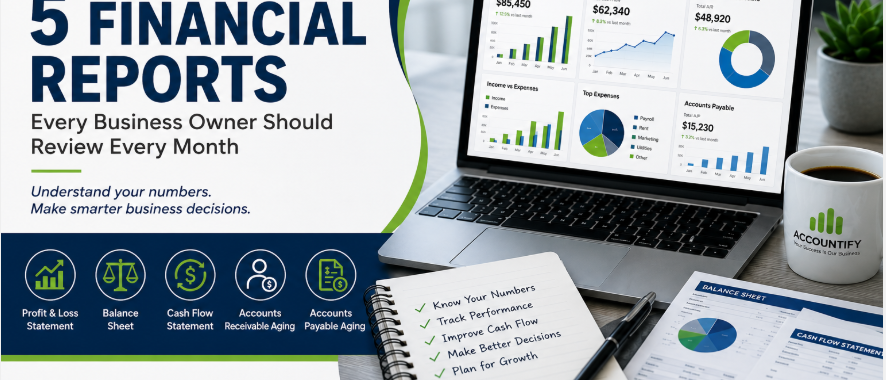
Financial reports do more than record your business activity. They show whether your company makes money, manages cash well, and stays financially healthy. Therefore, reviewing them every month helps you make better decisions before small issues become serious problems.
The U.S. Small Business Administration recommends using key financial statements to understand profitability, cash flow, assets, liabilities, and equity. In addition, monthly reporting helps you track trends and plan your next steps with greater confidence.
1. Profit and Loss Statement
The Profit and Loss Statement, also called a P&L, shows your revenue, expenses, and net profit for a specific period. It helps you understand how well your business performed during the month.
Review your P&L to:
- Measure overall profitability.
- Compare revenue with previous months.
- Identify rising or unnecessary expenses.
- Check whether your profit margin is improving.
- Compare actual results with your budget.
However, strong sales do not always mean strong profits. If revenue increases while expenses rise faster, your business may be growing without becoming more profitable.
2. Balance Sheet
A Balance Sheet provides a snapshot of your company’s financial position on a specific date. It lists your assets, liabilities, and owner’s equity.
Use this report to understand what your business owns and owes. In addition, review changes in cash, inventory, loans, and accounts receivable.
A monthly balance sheet can help you:
- Monitor financial stability.
- Track business debt.
- Understand available working capital.
- Prepare for financing discussions.
- Identify unusual changes in assets or liabilities.
Your assets should equal your liabilities plus owner’s equity. Therefore, ask your accountant about any unexpected imbalance or major change.
3. Cash Flow Statement
A Cash Flow Statement tracks money entering and leaving your business. It explains why your bank balance may change, even when your P&L shows a profit.
Review cash flow to confirm that you have enough money for payroll, rent, taxes, loan payments, and supplier bills. Moreover, look for upcoming cash shortages before they affect daily operations.
Remember, profit does not always equal cash. For example, a customer invoice can increase revenue today, while the payment may arrive weeks later.
4. Accounts Receivable Aging Report
The Accounts Receivable Aging Report lists unpaid customer invoices and shows how long each invoice has remained outstanding. Common categories include current, 30 days overdue, 60 days overdue, and 90 or more days overdue.
Review this report every month to improve collections and protect your cash flow. In addition, assign a clear follow-up action to each overdue account.
Focus on:
- Customers with large unpaid balances.
- Invoices that are more than 30 days overdue.
- Accounts that repeatedly pay late.
- Disputed invoices that need quick resolution.
Early follow-up usually works better than waiting until an invoice becomes seriously overdue.
5. Accounts Payable Aging Report
The Accounts Payable Aging Report shows the bills your business owes to suppliers, contractors, and other vendors. It also shows when those payments are due.
Review the report to plan payments and avoid late fees. Furthermore, timely payments can help you maintain strong vendor relationships and protect your business credit.
Check whether:
- Any invoices are past due.
- Large payments are due next month.
- You can use available early-payment discounts.
- A bill appears duplicated or incorrect.
- Your payment schedule matches your cash position.
Create a Monthly Review Routine
Set aside a fixed time each month to review all five reports. Ideally, examine the previous month’s numbers after your accounts have been reconciled.
Compare each report with the previous month, the same month last year, and your budget. Then, write down one positive trend, one concern, and one action for the coming month.
This simple routine helps you understand profitability, improve cash flow, control costs, and identify financial issues early. As a result, you can make informed decisions and guide your business toward sustainable growth.
For more guidance on managing business finances, visit the U.S. Small Business Administration’s finance guide.